
How to Plan Travel with Intention: Why “Less Is More” Makes Better Vacations
It’s easy to fall into the trap of overplanning a vacation. Many travelers try to fit as much as possible into a limited amount of time, only to return home feeling exhausted instead of refreshed. This is not to say that all travel happens for relaxation. Sometimes we travel with a mission, to get something specific accomplished, and that isn’t the same as traveling to feel refreshed. When I plan a trip to somewhere like Disney World, I am not doing this because I want to relax. I might come back feeling like I had a break because I stepped away from my routine for some fun, but I don’t necessarily come back thinking “I am so grateful for that relaxing trip to the Happiest Place on Earth.”
Intentional travel focuses on quality over quantity. This means creating trips that feel meaningful, balanced, and enjoyable instead of rushed and crammed with activities. When you plan with intention, your vacation becomes something you truly experience rather than something you just survive.
Here are simple ways to plan a trip that feels calmer, more meaningful, and actually relaxing.
Plan Your Trip Around Energy…Not Just Activities
Most itineraries focus on what you want to see, but intentional travel considers how you want to feel. I know - I’m such a counselor.
Before planning, ask yourself:
Do I want this trip to feel relaxing or adventurous?
How busy do I realistically want to be?
How much downtime do I need?
A good rule of thumb is to plan no more than one or two major activities per day. Anything else becomes a bonus rather than an obligation. If you plan too many things and you don’t get to them all you risk not only feeling defeated, you risk losing money!
2 .Schedule Real Rest Days
Many travelers think a rest day means “a lighter sightseeing day,” but true rest days include no required plans at all.
Rest days might include:
Sleeping in
Relaxing by the pool
Visiting a café
Taking a casual walk
Letting kids play without a schedule
For most trips:
A long weekend should include at least a half-day of downtime
A week-long trip should include at least one full rest day
Longer trips should include multiple slower days
Rest days help prevent travel burnout and keep everyone happier. I think this is especially true if you are traveling with children. They get overwhelmed, overstimulated, and just plain tired. They start saying they don’t want to do things and giving you trouble when it is time to go somewhere. Then it turns into arguments and frustration rather than the enjoyable vacation it is supposed to be.
3. Remember That Less Is More
One of the biggest mistakes travelers make is trying to see everything.
Instead of visiting multiple destinations in one trip, consider staying in one or two places and exploring them more deeply.
Instead of planning ten attractions, choose the three or four that matter most.
Travel becomes more enjoyable when you have time to:
Notice your surroundings
Enjoy meals without rushing
Take breaks when you need them
Be spontaneous
Often the moments people remember most aren’t the packed schedules…they’re the relaxed ones.
4. Leave Space in Your travel Schedule
Intentional travel includes open time on purpose.
Unscheduled time allows for:
Unexpected discoveries
Weather changes
Extra rest
Flexibility with kids
Following local recommendations
Try alternating activity and downtime:
Morning activity → afternoon rest
Active day → slower day
This rhythm helps keep energy levels steady throughout the trip.
5. Set Boundaries Before You Go
Many travel frustrations come from unclear expectations.
Before your trip, talk about:
How early you want to start the day
Budget expectations
How busy you want to be
Must-see vs. optional activities
Work and phone boundaries (this is a big one!)
Simple agreements like “one major activity per day” or “no early mornings unless necessary” can make a big difference in how the trip feels.
6. Protect Travel Days
If I could recommend one thing it is to protect travel days. Arrival and departure days are often the most tiring. Planning too much on these days can make a trip feel stressful from the start.
Instead, keep travel days simple:
Check in and get settled
Take a short walk
Have an easy meal
Go to bed early if needed
Starting slowly helps everyone adjust and enjoy the rest of the trip more. Travel itself, whether by plane or car, can be very unpredictable. Keeping travel days for arrival and departure and getting settled in your new location will help to prevent any anxiety/stress related to missing reservations or planned activities.
7. Choose One “Anchor Experience” Per Day
An easy way to balance structure and flexibility is to plan one meaningful activity per day.
Examples might include:
A guided tour
A special restaurant
A scenic walk
A museum visit
A unique local experience
Everything else can be optional.
This approach creates memorable days without feeling overwhelmed. This can be very location/destination specific. If you are in Paris, one day you visit the Eiffel Tower. On that day you don’t have to plan or schedule anything else. If you happen to get in another unplanned activity - great! - but if you don’t, how incredible is it that you spent the day at the Eiffel Tower?
8. Define What a Successful Trip Looks Like
As a counselor I often talk to clients about what success means to them. This applies in planning travel as well.
Maybe it means:
Feeling relaxed
Spending time together as a family
Disconnecting from work
Exploring a new place without rushing
Coming home feeling refreshed
The best vacations aren’t the ones where you see the most, they’re the ones where you enjoy the most.
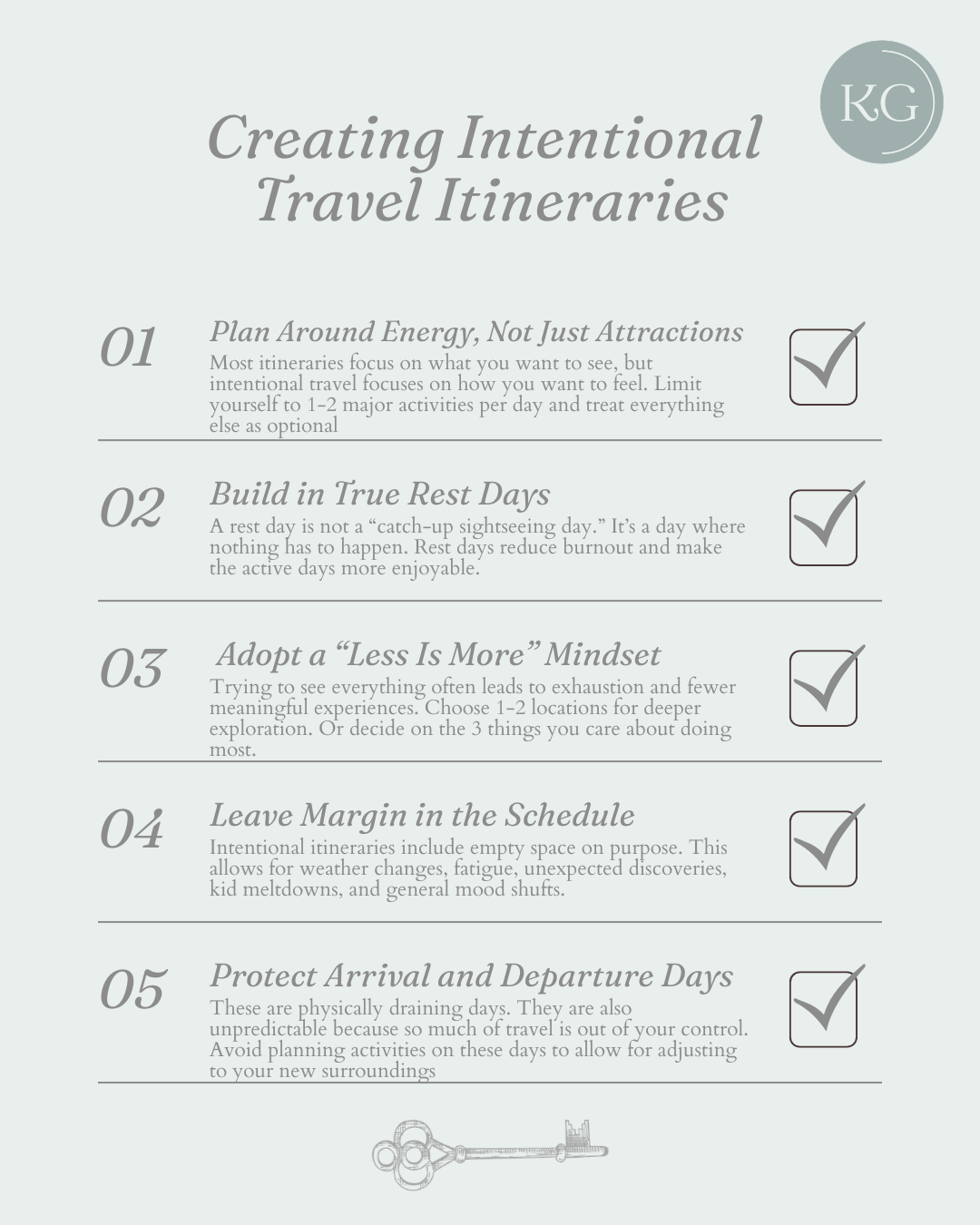
5 Tips for Intentional Travel
When you plan with intention, travel becomes less stressful and more meaningful, exactly what a vacation should be.
I am by nature an overplanner for myself. I think this is what makes me so adept at picking out the overwhelm in other people’s schedules and plans. Travel is exciting. When you are planning for yourself it is easy to get lost in all of the possibilities and forget about the reality of how fun AND exhausting new experiences can be.
How can you plan your next vacation with intention? Are there things that you can already see might need to be adjusted in your schedule?